





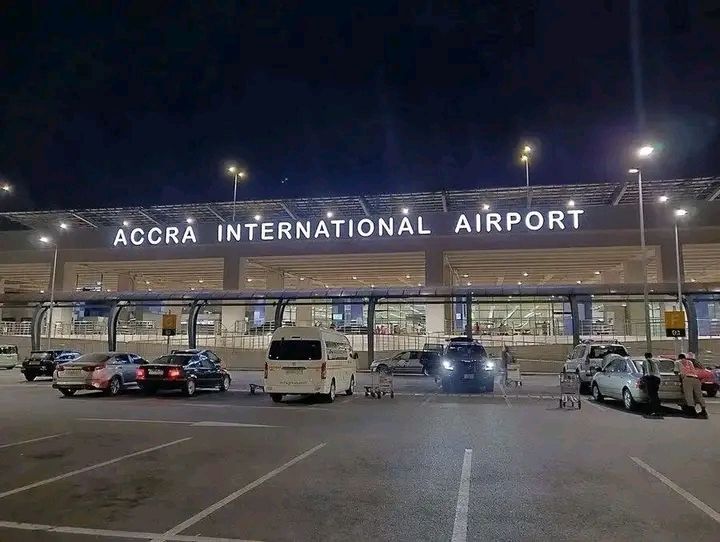
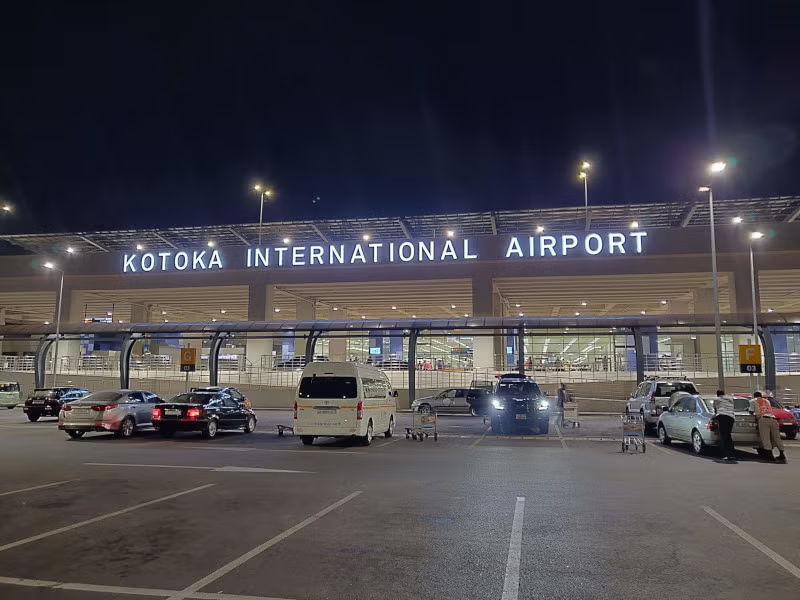
Ghana has restored the original name of its principal gateway to the world, with the Ministry of Transport announcing on 23 February that Kotoka International Airport will once again be known as Accra International Airport — a change officials say brings the country in line with longstanding international aviation records.
The Ministry of Transport said the decision to revert the name was driven in part by a longstanding discrepancy between the airport’s domestic designation and its international one. The International Civil Aviation Organisation (ICAO) had continued to list the airport under its original name throughout the decades, making the restoration a matter of formal alignment as much as historical reconsideration.
“The airport was originally known as Accra International Airport before it was later renamed,” the ministry said in its official statement. “It is considered appropriate to restore it to its former and internationally recognised name.”
The airport was originally established as Accra International Airport before being renamed in honour of Kotoka following his death in April 1967. Kotoka was among the leading architects of Operation Cold Chop — the military coup of 24 February 1966 that removed Ghana’s first president, Dr Kwame Nkrumah, from power while he was abroad on a peace mission to Hanoi, Vietnam.
Officials were keen to stress that the change would have no bearing on airport operations, safety standards, or international travel arrangements. Passengers travelling through the facility will notice little difference beyond the signage.
The announcement came just one day before the 60th anniversary of the military coup that defined the airport’s former namesake, Lieutenant General Emmanuel Kwasi Kotoka, in the national consciousness.
Nkrumah, a towering figure in pan-African politics and one of the founding fathers of post-colonial Africa, never returned to Ghana after the coup. He died in exile in 1972.
Kotoka himself was killed the following year, on 17 April 1967, during a counter-coup attempt by junior army officers. His death elevated him to a form of military martyrdom, and the airport renaming was seen at the time as a fitting tribute.
The announcement has not been without controversy. Supporters of the move have welcomed it as a step towards a more inclusive national identity, arguing that naming the country’s most prominent international airport after a man who overthrew a democratically elected government sent an uncomfortable message to the world.
Critics, however, contend that the renaming erases a significant chapter in Ghana’s history and dishonours a soldier who played a consequential, if contested, role in shaping the modern Ghanaian state.
The government has sought to strike a conciliatory note, confirming that memorials and tributes to Lieutenant General Kotoka will be retained within the airport precinct. His legacy, officials insist, will not be wiped away — merely repositioned.
A Symbolic Moment
For many Ghanaians, the timing of the announcement — on the eve of the 60th anniversary of the 1966 coup — was anything but coincidental. Whether by design or happenstance, the decision to restore the airport’s original name just as the country marks six decades since Nkrumah’s removal from power carries a symbolism that has not been lost on historians or the public.
