



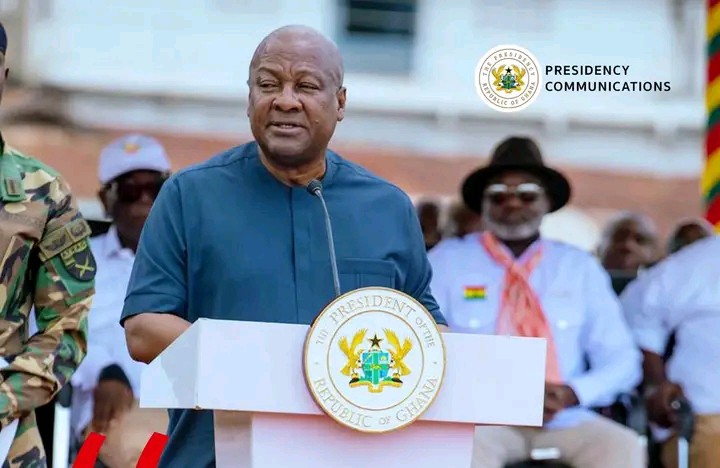
Ghana President John Dramani Mahama has announced that the Finance Minister will soon present a sweeping new economic policy to Cabinet and Parliament, signalling a significant shift in the country’s approach to growth and employment.
Speaking at the national May Day celebrations in Koforidua, in the Eastern Region, on Friday, Mr Mahama said the policy would direct one per cent of the country’s gross domestic product annually into high-growth sectors identified as having strong potential for job creation.
The President framed the announcement as part of a broader transition, saying the government was moving beyond macroeconomic stabilisation into a new phase of aggressive job creation and economic expansion under what his administration calls the “Reset Ghana Agenda.”
“Our mission is clear: we want to turn stability into opportunity,” Mr Mahama told the gathered workers and trade union representatives.
The President said value addition and the digital economy would serve as key pillars of the transformation agenda, with investments designed to ensure that workers are not only employed but empowered.
The announcement builds on what the Mahama administration has described as a significant macroeconomic recovery. Ghana’s GDP rose from $83bn in 2024 to $113bn in 2025, and the country recorded average GDP growth of 6.1 per cent across the first three quarters of last year. Inflation, which peaked at 54.1 per cent in late 2022, fell to 3.8 per cent by January 2026 — a decline achieved over 13 consecutive months.
Under the 24-hour economy policy, recently approved by Parliament, the government is also pushing a major shift in industrial operations aimed at boosting productivity and employment. The President indicated that the manufacturing sector would benefit from tax incentives and reduced electricity costs for firms operating multiple production shifts.
The May Day address came as organised labour continued to press the government on wages and working conditions. Trade unions have called for a comprehensive incomes policy to address wage disparities, raising concerns about the rising cost of living, pension sustainability, and job security. Mr Mahama assured labour of the government’s commitment to reforming the current pay structure through a new emoluments policy aimed at promoting equity and transparency in public sector remuneration.