







In her 2021 book Loved Clothes Last, Orsola de Castro, founder of the global campaign Fashion Revolution, issues a cri de coeur. “In my years of scouring second-hand clothing sorting warehouses I have seen hundreds of perfect pieces abandoned simply because of a broken zip. After all, what is the point of spending time and money repairing a broken zip when ultimately it is quicker, cheaper and infinitely more fun to buy a new piece, with a fully functioning zip? But can we please stop and consider what we are doing when we give up hope on the one that broke? And what happens when we choose to mend it instead?”
De Castro’s questions are just two of many confronting fashion in the 21st Century. It is increasingly hard to downplay the environmental and social damage the industry causes. Natural resource use rates are stratospheric, as are pollution and waste levels, while global supply chains are riven with exploitation. Finally, the sector is responsible for between two and eight percent of total global greenhouse gas emissions, depending on which study you read. These are breathtaking facts, given that, after a certain point, this is an industry trading in non-essentials. Very few of us in fashion-consuming capitals around the world really need more clothes. Yet nonetheless, out they are churned, between 80 to 100 billion pieces a year.
Being creative with the clothes we own, rather than always buying new, helps the environment (Credit: Getty Images)
Fashion is scrambling to meet the challenge with intricately researched roadmaps and reports that include a raft of plans to increase energy efficiency in supply chains, switch to renewables, invest in material innovation that sidesteps synthetics, ramp up social justice initiatives and address animal cruelty. But, while these efforts are well-meaning, they are pitted against an industry already megalithic in its impact. Most of those 80 to 100 billion items of clothing – a conservative estimate – already end up incinerated or in landfill after just a few wears. The pandemic delivered a blow; now, global fashion sales are on track to pick up momentum to just over 2019 levels, according to McKinsey Fashion Scenarios.
Where once our grandparents lived lives of thrift and repair, most consumers today have become acclimatised to a wear, break and chuck model
Increasingly, campaigners are arguing that one of the easiest ways of slashing fashion’s impact is by buying less (far less, just three new pieces of clothing a year, according to campaign group Take the Jump), and by making the clothes we already own last longer. Basically, the fashion industry needs to shrink in size, substantially. For a generation of shoppers pumped up on constructed desires and instant gratification, this can be hard to envisage – but the figures are irrefutable. Research by environmental charity Wrap shows that extending the life of an item of clothing by just nine months could cut its environmental impact by up to 10 percent; imagine what could be achieved over decades. Factors that contribute include buying good quality clothing, the willingness of owners to wear the same item over and over again, and their ability to take care of them. These may sound easy to achieve but if they were, we’d have done them already. Now, however, the stakes feel too frighteningly high not to try.
It has, after all, been just over a generation since we have lost the fine art of clothing maintenance. Where once our grandparents lived lives of thrift and repair, most consumers today have become acclimatised to a wear, break and chuck model. De Castro’s perfect pieces with broken zips are symptoms of a profound disconnection from how clothing is made. But it is now more important than ever to ask why so much of our clothing is petroleum-based; whether the rayon in that jumper was sourced from ancient forests; what animal’s fur has gone into that pom pom; why only a minority of garment workers are paid a living wage – and whether we still want a hand in driving all this destruction. De Castro subtitled her book “how the joy of re-wearing and repairing your clothes can be a revolutionary act”. It’s true. We need a revolution.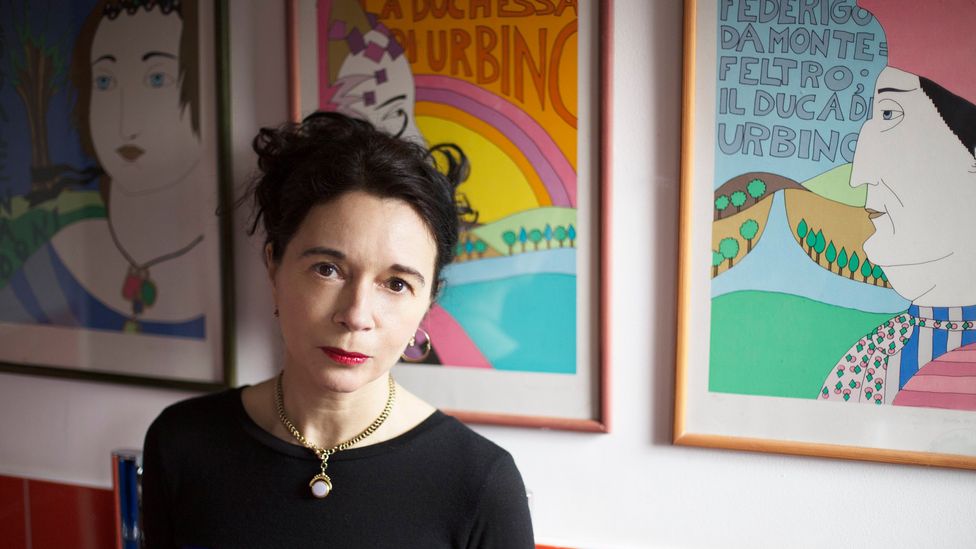
Orsola de Castro, founder of Fashion Revolution and author of Loved Clothes Last (Credit: Penguin)
The first step is to re-encounter your own wardrobe; textile reuse charity Traid’s 23 Percent Campaign was launched in 2019 to highlight the proportion of clothes Londoners left unworn in their wardrobes. Sam Weir is founder of Lotte.V1, a one-on-one styling service, aimed at rekindling our relationship to our clothing. “Many of us don’t use what we own because we’ve been taught to find style solutions through consumption,” says the stylist, with a long track record in high-profile campaigns. “Styling allows people to express themselves and have fun with clothing, without buying new; to push creativity and to truly wear their clothing. It’s about learning to interact with fashion, outside of consumption, and it’s forming relationships with our things.”
Where do we start? “Block off two hours one week and open up your wardrobe,” she continues. “Look for pieces you haven’t worn in months or more. Maybe one is a formal blouse. This is where styling can help. Pair it with relaxed denim, something you’d only wear on a weekend. Add kitten heels and a blazer. Through styling, you’ve taken an item you’ve only worn in one setting, and made it work for countless others. Through creative styling, dresses can become skirts or tops; old becomes new again. It’s as if you just went shopping, and yet you never left your wardrobe.”
It helps if you’ve bought well to start with, says Mikha Mekler, lecturer in production management at London College of Fashion. “The way we buy is the problem. If we buy quality, it lasts longer.” Start by dodging fast fashion brands and their glossy, celebrity-laden advertising campaigns, and head straight for ethical labels that pride themselves on craftsmanship. Even then, check for yourself: the heft of an item and the quality of its details can tell you a lot. “Test the garment,” says Victoria Jenkins, garment technologist and founder of adaptive clothing label Unhidden. “Pull it, tug on it, look at the stitching. Is it neat and tidy – or full of loose threads? Can you see ‘grinning’, where the thread is visible at tension points on the seam? Does the garment have hanger loops to stop it losing shape? Is there taping along a T-shirt shoulder to stop it from being distorted if it is hung up? Is the hem sturdy or can it be easily unpicked? Is there shading on the fabric; are there faults in the print beyond what you might expect?”
Most sustainable clothing experts agree: wash clothes less – and wash them cooler
The next step is care. In his 1954 essay Soap Powders and Detergents, semiotician Roland Barthes wrote about the use of foam – not strictly necessary in the cleaning process – in an advertisement for detergent: “What matters is the art of having disguised the abrasive function of the detergent under the delicious image of a substance at once deep and airy which can govern the molecular order of the material without damaging it.” The idea persists that washing somehow renews and refreshes but, in fact, as Barthes points out, it’s quite destructive. Most sustainable clothing experts agree: wash clothes less – and wash them cooler, properly sorted, with gentle, natural laundry detergents, and inside out to prevent colour and prints fading.
In 2019, designer Stella McCartney put it best when she told The Observer: “The rule is you do not clean it. You let the dirt dry and you brush it off. Basically, in life, rule of thumb: if you don’t absolutely have to clean anything, don’t clean it. I wouldn’t change my bra every day and I don’t just chuck stuff into a washing machine because it’s been worn. I am incredibly hygienic myself, but I’m not a fan of dry cleaning or any cleaning, really.”
“Garment care is still something people get wrong on a day-to-day basis,” says Mekler. “I wash a lot of garments, especially the finer things, even jeans, on a wool wash unless they’re really dirty.” Consider hanging lightly soiled pieces in the bathroom while you take a shower and allowing the steam to do the job. Avoid tumble drying; shake out your clothes and hang them out to dry. And then revel in the positive environmental benefits of your new routine. According to the EPA’s energy efficiency programme Energy Star, the average washing machine uses 6,500 gallons of water a year, about half as much as you’d drink in a lifetime. Plus, every time we wash, we flush chemicals and microfibres from synthetic garments into overburdened waterways. Finally, most of the emissions produced during the “in-use” stage of an item’s life cycle originate from washing and tumble drying. Cut that and you’re basically a sustainable fashionista.
To have and to hold
Once you’ve cleaned your clothes, resist the urge to throw them on the floor or ball them up at the back of the sofa. Correct storage does half the work of clothing care; top tips include keeping cleaned clothes away from sunlight and heat, in cool, dry spaces, with enough space between them to breathe. Professional organiser Katrina Hassan uses the KonMari Method of tidying. “Awareness and positive habit change is at the heart of the process,” she says. “And a key principle is to store things so that you can see everything easily. When you know exactly what you own, you’re far more likely to take care of it.” Periodic assessments allow you to connect with your items and assess their quality over and over again. This is when it’s time to start getting hands-on.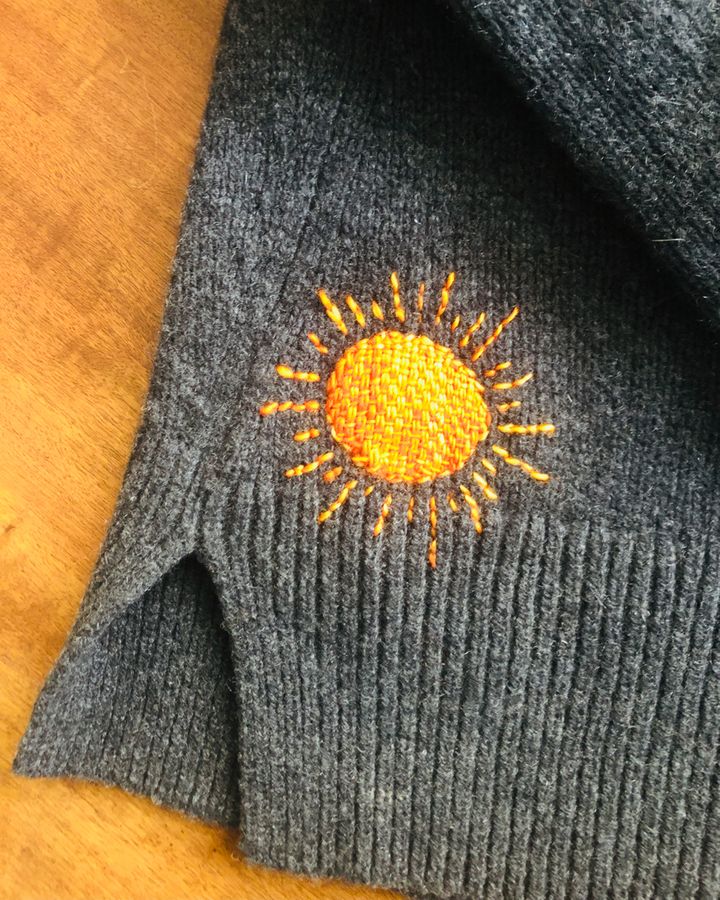
Visible mending, such as this stitching by Tessa Solomons, is an increasingly popular way to repair much-loved garments (Credit: Tessa the Dresser)
“We’ve all put things away in a cupboard when a button has fallen off but it would be great if we could just do the basics like threading a needle, sewing on a button, mending a seam,” argues sustainable consultant Tessa Solomons. “[The lack of these skills] stops a lot of people at the first hurdle but these alone would save clothes being sent to landfill – or to charity shops where someone else has to deal with them. Plus, it gives you a great sense of achievement, to know that you’ve got that within your capability. It’s a fantastic, joyful thing.” There’s no lack of online resources for the new sewer: both Repair What You Wear and Fixing Fashion Academy offer unintimidating video tutorials to entry-level skills; other sites such as The Clothes Doctor take it up a level with “how to repair your bra” and “crochet a patch on jeans”.
When you visibly repair something, it becomes individual. That changes our relationship to our clothing and builds connection with it – Tessa Solomons
“Watch videos specifically about what you want to mend,” advises Solomons. “And enjoy it. Get the things you need around you in one place. Put some lovely music on and take your time. Then it doesn’t become a chore. It’s a choice.” Embrace visible mending, where people are encouraged to salvage their clothes in creative ways using contrasting coloured stitches, embroidered motifs and patching. Not only does it take the pressure out of trying to achieve perfection, it’s fun. “I’ve got a pair of dark blue trousers with a yellow button on them – because I couldn’t find a dark blue button to replace the lost one,” says Solomons. “Now I just love that button. It changes the whole thing.” Raeburn, a label based in London that focuses on responsible and innovative design, hosts a variety of workshops where attendees are invited to design and customise their own items, using off-cuts from the atelier. But if this still feels tricky, “employ the services of someone who loves mending,” says Solomons. “There are many people out there who are changing the way we think about mending, one stitch at a time.”
Repair specialists at ethical high-street label Toast rescue any Toast garment as part of a free “renewal” service. Online Reture Bespoke pairs broken pieces with talented young upcyclers. Janelle Hanna, design consultant at sustainable sourcing consultancy White Weft, launched a service to patch and repair denim during lockdown. “I’ve been blown away by how popular it’s been,” she says. “People aren’t coming to me with one or two pairs of jeans; they’re coming to me with five or six pairs they’ve not worn for a year, two years, three years, but they just didn’t want to throw them away. People want options around repairs. And they just didn’t know that it existed.”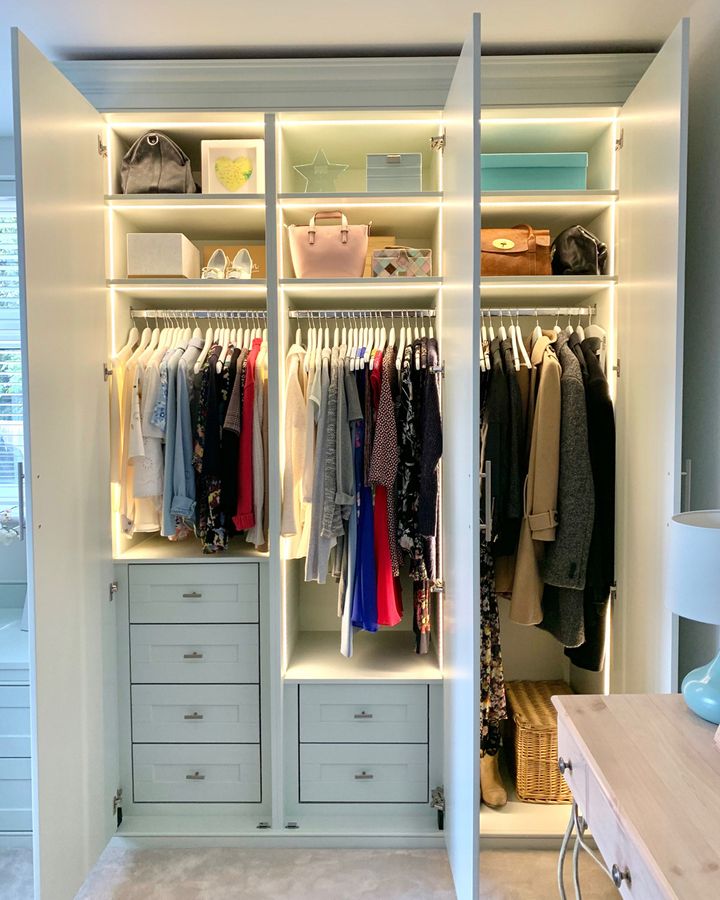
If clothing is well organised, it is easier to know exactly what we own, and we will be more likely to wear it and look after it (Credit: Katrina Hassan, Spark Joy London)
Making the decision to mend profoundly changes our relationship to a piece of clothing. “When people choose to repair, they’re investing in that item,” says Solomons, whose own embroidery filips now decorate the clothes of dozens of clients. “People come to me with items that have been in their wardrobes or in their families for a long time, that have had a life. When I add to that, they love it even more. That’s everything to me.” In a world of mass-produced goods, where thousands of items looking exactly the same pour out of factories, every minute of every day, promising ease and convenience, that’s special. “When you visibly repair something, it becomes individual,” says Solomon. “That changes our relationship to our clothing, and builds connection with it. The people who come to me have realised that their clothes have a value rather than a cost. And that value is something that we cannot put a price on.”
The synergy with De Castro, the idea of the quiet revolution, is striking. “Today, at the dawn of Generation Climate Breakdown, the #lovedclotheslast message we share when we mend and alter our clothes has gone beyond showing off sartorial originality,” writes De Castro. “It is now a statement that the act of caring for our clothes extends to the act of caring for our environment, and marks our gratitude by valuing the work of the people who make the things we wear.” She continues: “Keep the clothes you have with pride, minimise new acquisitions, and do it with the kind of infectious enthusiasm that radiates joy. Because the only things we need more of now are trees and whales and birds and bees – not clothes.”


