




Sudan’s warring factions, on Tuesday April 25, 2023 pleadged to observe a new three-day truce that was brokered by the U.S. and Saudi Arabia in an attempt to pull Africa’s third-largest nation back from the abyss.
The claims were immediately undercut by the sound of heavy gunfire and explosions in the capital of Khartoum. Residents said warplanes were flying overhead.
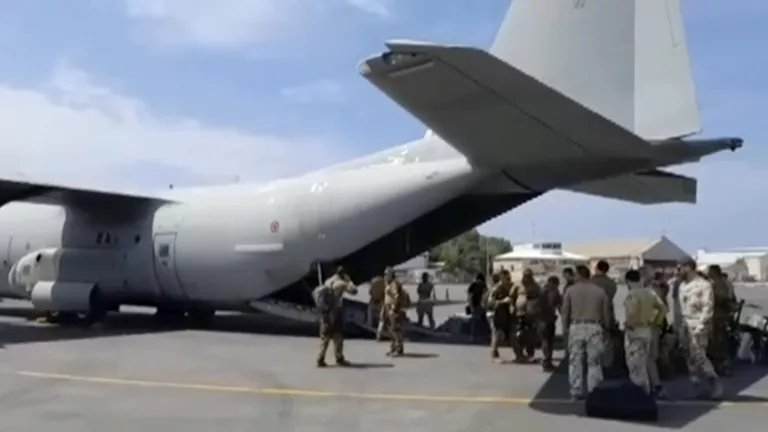
Several previous cease-fires declared since the April 15 outbreak of fighting were not observed, although intermittent lulls during the weekend’s major Muslim holiday allowed for dramatic evacuations of hundreds of diplomats, aid workers and other foreigners by air and land.
For many Sudanese, the departure of foreigners and closure of embassies is a terrifying sign that international powers expect a worsening of the fighting, which has already pushed the populace into a disaster.
Many Sudanese have desperately sought ways to escape the chaos, fearing that the rival camps will escalate their all-out battle for power once evacuations are completed.
In Khartoum, bus stations were packed Tuesday morning with people who had spent the night there in hopes of getting on a departing bus. Drivers increased prices, sometimes 10-fold, for routes to Port Sudan or the border crossing with Egypt.
Late Monday, U.S. Secretary of State Antony J. Blinken announced that he had helped broker a new 72-hour cease-fire. The truce would be an extension of the nominal three-day holiday cease-fire.
The Sudanese military, commanded by Gen. Abdel Fattah Burhan, and the rival Rapid Support Forces, a paramilitary group led by Gen. Mohammed Hamdan Dagalo, said Tuesday they would observe the cease-fire. In separate announcements, they said Saudi Arabia played a role in the negotiations.
“This cease-fire aims to establish humanitarian corridors, allowing citizens and residents to access essential resources, healthcare, and safe zones, while also evacuating diplomatic missions,” the RSF said in a statement.
The army announcement used similar language, adding that the military would abide by the truce “on the condition that the rebels commit to stopping all hostilities.”
But fighting continued, including in Omdurman, a city across the Nile River from Khartoum. Omdurman resident Amin Ishaq said there were clashes early Tuesday around the state television headquarters and around military bases just outside Omdurman.
“They did not stop fighting,” he said. “They stop only when they run out of ammunition.”
“Sounds of gunfire, explosions and flying warplanes are still heard across Khartoum,” said Atiya Abdalla Atiya, a senior figure in the Sudan Doctors’ Syndicate, a group that monitors casualties. “They don’t respect cease-fires.”
Atiya said he suspected the main purpose of declaring a new case-fire was to allow for more foreigners to be evacuated.
Sudan was once a symbol of hope because of its fitful efforts to transition from decades of autocratic rule to democracy. Now it faces a bleak future. Even before April 15, one-third of the population of 46 million relied on humanitarian assistance. Most of those providing aid have suspended operations.
In the last 11 days, Sudanese have faced a harrowing search for safety in the constantly shifting battle of explosions, gunfire and armed fighters looting shops and homes. Many have been huddling in their homes for days. Food and fuel are leaping in price and harder to find, electricity and internet are cut off in much of the country and hospitals are near collapse.
Those who can afford it were making the 15-hour drive to the Egyptian border or to Port Sudan on the Red Sea coast. Those without means to get abroad streamed out to relatively calmer provinces along the Nile, north and south of Khartoum.
United Nations Secretary-General Antonio Guterres warned of a “catastrophic conflagration” that could engulf the whole region. He urged the 15 members of the Security Council to “exert maximum leverage” on both sides in order to “pull Sudan back from the edge of the abyss.”
More than 420 people, including at least 291 civilians, have been killed and more than 3,700 wounded since the fighting began. The military has appeared to have the upper hand in Khartoum, but the RSF still controls many districts in the capital and Omdurman, and has several large strongholds around the country.