






Life in the Sudanese capital Khartoum was turned upside down as military ruler Gen Abdel Fattah al-Burhan, commander-in-chief of the Sudanese Armed Forces (SAF), and his erstwhile ally, Gen. Mohamed Hamdan Dagalo, better known as Hemedti, the head of the powerful paramilitary Rapid Support Forces (RSF), went to war. Khartoum has seen unrelenting fighting and bombardment since.
As of Tuesday, at least 200 civilians were reported to have been killed, and nearly 2,000 injured in the fighting.
Burhan and Hemedti go way back. They oversaw the deadly war in Darfur, Burhan as military chief and Hemedti leader of the murdering Janjaweed pro-government militia. In October 2021, they carried out a coup against the interim civilian administration of Prime Minister Abdalla Hamdok. Hemedti had set up the RSF as a more respectable replacement for the Janjaweed.
The outbreak of the fighting in Khartoum brought a wave of Afropessimism. When one thinks it can’t get worse in Africa, it does. With the bloody war in Ethiopia’s Tigray ending, the region desperately needed a break. It didn’t get it.
So, yes, Africa is being Africa, but it has and will survive. It survives because while the centre often falls apart, the margins are stable, creative, and hold together. Many times the events on the margins don’t involve the state; occasionally, they do.
Let’s look at the last few weeks, starting with Kenya. A group in Kenya, 14Trees, is building the world’s largest 3D-printed affordable housing development in Kilifi. Not only that, it was reported it managed to get the first ten houses printed in just ten weeks.
14Trees is 3D-printing 52 affordable houses in the town of Kilifi. When completed, the development, which we learn is called “Mvule Gardens,” will be the world’s largest 3D-printed affordable housing complex.
Kenya and Tanzania are also doing something radical with rats. Recently it was reported that Tanzanian and Kenyan scientists with the APOPO Project, which has been in the news in recent years for training rats to smell landmines — with the rodents deployed in places like Mozambique and Vietnam – have trained them to sniff out tuberculosis, and that they’re proving more sensitive than microscope testing.
The rats were also able to detect characteristics of TB independent of a person’s HIV status, something which disrupts existing TB testing.
Tuberculosis still kills millions worldwide, and in the Tanzanian capital of Dar es Salaam, the APOPO rats have now replaced normal testing in 21 different health clinics, according to an Africa News report.
The conventional laboratory techniques can take anywhere from two hours to even 14 days per sample. The rats will be able to complete the testing of fifty samples within two hours, which would be ideal in distant or remote places.
Enter Paul Waweru, a Kenyan high school teacher who is reported to be using old laptop batteries to turn petrol-powered bikes into electric ones.
Waweru turns second-hand electronics destined to become waste products into something useful.
Waweru cannibalises the laps for the cells that still can hold a decent charge. Once he has enough, he configures them into battery packs to replace the internal combustion engines of existing scooters and bikes.
“Nobody was selling electric bikes in Kenya, so I had to import one,” he told African News.
The imported bicycle didn’t last long, so he used his innovation to create a more durable alternative. He founded a company called Ecomobilus which is already selling well.
On the sharper innovation edge, we were delighted to read Africa recently achieved its first domestic cancer test with the arrival of a Moroccan-born test for breast cancer and leukaemia.
Most diagnostics kits are imported from Europe or North America. The test, developed by the Moroccan Foundation for Advanced Science, Innovation and Research (MASciR), could reduce cost and wait times significantly.
MASciR was one of the first firms in Africa to develop a Covid-19 test, which was sold in Tunisia, Senegal, and the Ivory Coast, as well as Rwanda. The cancer tests will likely be available in these countries first.
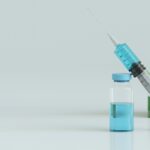
Staying with health things, a few days ago, Ghana became the first country to approve a new malaria vaccine called R21 from Oxford University. It will be given to children between the ages of five months and three years.
The R21 vaccine has already been given to 4,000 infants in six African countries. The vaccine, described as a “world-changer” by the scientists who developed it, was up to 80 per cent effective when given in three doses, followed by a booster a year later in a preliminary trial conducted in Burkina Faso.
That final trial data drew on a study of nearly 5,000 children in Burkina Faso, Kenya, Mali and Tanzania. The Serum Institute of India is preparing to produce between 100-200 million doses per year, and a vaccine factory is being built in Ghana’sGhana’s capital, Accra.
There was also some good in politics, Africa’s leading producer of gloom. Gabon’sGabon’s parliament voted to reduce a presidential term from seven to five years as part of a constitutional amendment; thank you.