



Hosts Morocco booked their place in the Africa Cup of Nations final for the first time in 22 years after goalkeeper Yassine Bounou’s heroics helped them overcome Nigeria 4-2 on penalties following a goalless 120 minutes at the Prince Moulay Abdellah Stadium in Rabat.
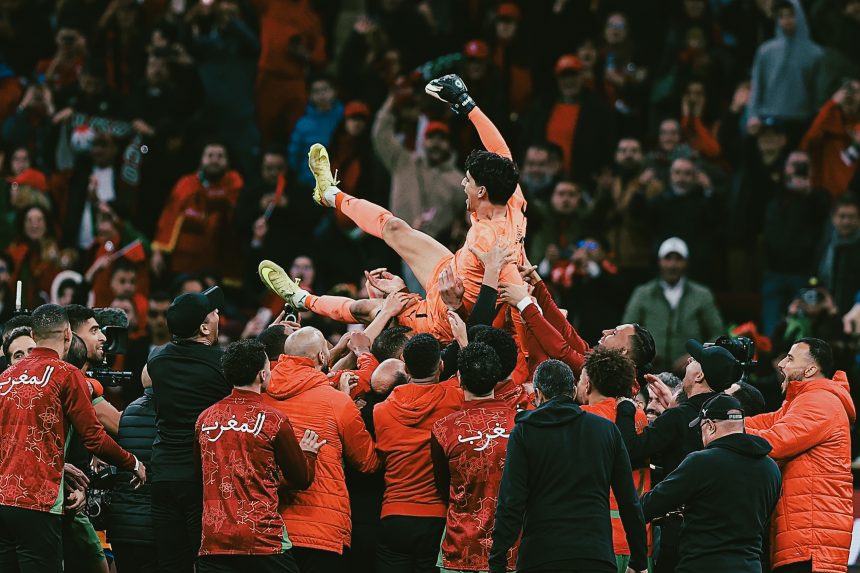
Al-Hilal’s Bounou made crucial saves from Samuel Chukwueze and Bruno Onyemaechi in the shootout before Youssef En-Nesyri calmly converted the decisive spot-kick to send the 64,000-strong crowd into delirium. The Atlas Lions will now face Senegal in Sunday’s final at the same venue, seeking their first continental title since 1976.
The match itself was a tense, tactical affair with both sides showing strong defensive organisation but creating few clear-cut chances. Nigeria, who came into the match as the tournament’s top scorers with 14 goals and the only side to maintain a perfect record, were unable to break down Morocco’s resolute defence despite dominating possession for large spells.
Morocco began brightly, with tournament top scorer Brahim Díaz squandering their best opening just before the half-hour mark. The Real Madrid forward misjudged a header from Achraf Hakimi’s right-wing cross, with his effort coming more off his shoulder than his head.
Nigeria’s star forwards Victor Osimhen and Ademola Lookman were largely kept quiet throughout, testament to Morocco’s defensive discipline and the vociferous home support. Lookman’s first-half drive from just outside the penalty area was easily saved by Bounou, representing one of the few moments the Super Eagles threatened.
The second half began in much the same fashion, with Morocco pressing from the outset as chants of “Dima Maghrib” (“Always Morocco”) rang around the stadium. The hosts created an early chance when Lookman lost possession in his own half, allowing Díaz to square for Abdessamad Ezzalzouli, but goalkeeper Stanley Nwabali showed excellent agility to palm the curling effort behind for a corner.
The most contentious moment of regulation time came in the 78th minute when Hakimi found space for a long-range strike that was blocked in the box by Calvin Bassey. Moroccan players, coaches, and fans appealed for a penalty, believing the ball had struck Bassey’s arm. Referee Daniel Nii Laryea waved play on, and after a VAR review, the decision stood despite replays showing the ball did appear to make contact with the defender’s arm.
Both sides made changes in the 84th minute. Moses Simon replaced Raphael Onyedika for Nigeria, whilst Morocco brought on Hamza Igamane and Oussama Targhaline for Ayoub El Kaabi and Bilal El Khannouss. Coach Walid Regragui was clearly preparing for the possibility of penalties, freshening his side for the battle ahead.
Extra time produced more of the same—industry and organisation but little cutting edge. Morocco altered their approach, playing longer balls in search of a breakthrough. One such delivery from Bounou found El Kaabi through on goal, but his headed control was heavy, allowing Bassey and Nwabali to combine and clear the danger, though the collision required treatment for the goalkeeper.
Nigeria coach Eric Chelle made a bold call in the second period of extra time, withdrawing captain Osimhen for Paul Onuachu. Morocco responded with the introduction of Eliesse Ben Seghir for Ismael Saibari, with both managers now clearly focused on the impending shootout.
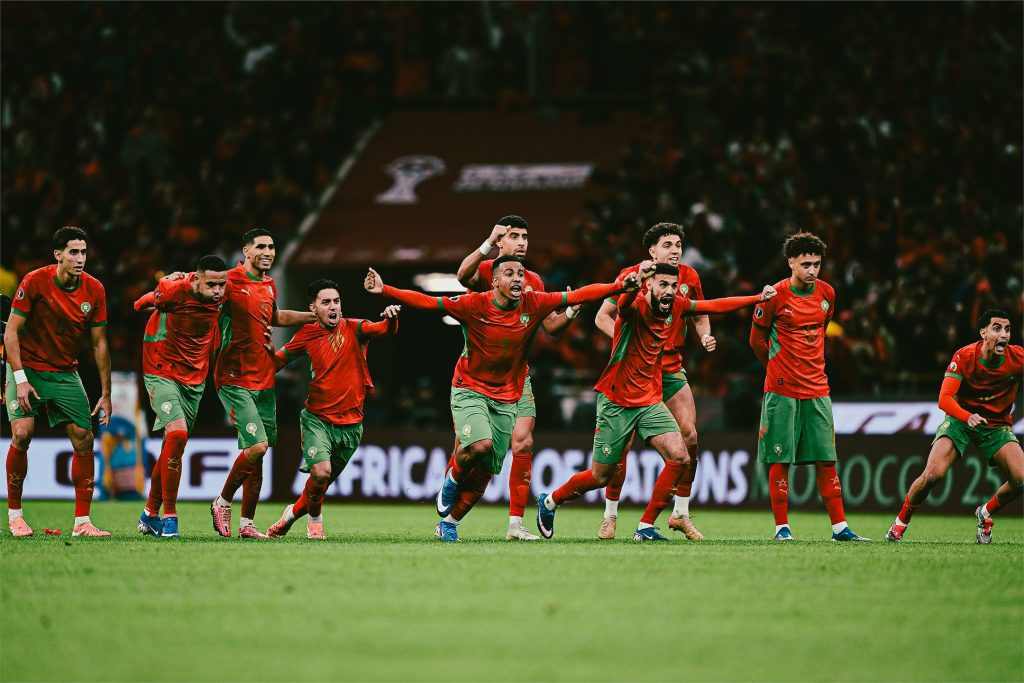
When the penalties arrived, it was Bounou who emerged as the hero. The shootout unfolded as follows:
- Nayef Aguerd scored for Morocco (1-0)
- Paul Onuachu converted for Nigeria (1-1)
- Hamza Igamane missed for Morocco (1-1)
- Samuel Chukwueze saved by Bounou (1-1)
- Eliesse Ben Seghir scored for Morocco (2-1)
- Fisayo Dele-Bashiru converted for Nigeria (2-2)
- Achraf Hakimi scored for Morocco (3-2)
- Bruno Onyemaechi saved by Bounou (3-2)
- Youssef En-Nesyri scored for Morocco (4-2)
Bounou’s save from Onyemaechi was particularly spectacular. Having jumped to his left, the African Goalkeeper of the Year demonstrated remarkable athleticism, halting his momentum to lean back right and stick out a strong hand to block the effort fired down the middle.
En-Nesyri, approaching 100 caps for his country, then stroked home the winning penalty into the bottom-left corner, sparking wild celebrations as the Moroccan bench emptied onto the pitch and jubilant fans danced and waved flags throughout the stadium.
For Nigeria, the defeat represents a cruel end to what had been an outstanding tournament. The Super Eagles had won all five of their matches, scoring 14 goals and looking like the team to beat. But knockout football proved unforgiving, and they now face Egypt in Saturday’s third-place play-off in Casablanca.
“We struggled to play our game today. It was very difficult. I don’t want to say we were tired, but it was tough. We couldn’t keep possession and when we had the ball, we couldn’t find solutions,” said coach Chelle after the match, the disappointment evident despite his composed demeanor.
For Morocco, this victory extends their unbeaten run to 26 matches, stretching back to their last-16 exit at AFCON 2023. More significantly, it represents only their second AFCON final appearance—having won the tournament via a final group phase in 1976 and lost to Tunisia in 2004.
The result also continues Nigeria’s struggles against Morocco at AFCON, with the Super Eagles having now lost five consecutive matches to the Atlas Lions in the competition.
Morocco coach Walid Regragui was jubilant after the final whistle: “It will be an amazing final between the two best teams on the continent in the last year. We’ve worked so hard for this moment.”
Sunday’s final will be a historic occasion. Morocco, backed by fervent home support and riding a wave of national pride following their 2022 World Cup semi-final run, will seek to end their 50-year wait for a second continental title. King Mohammed VI’s decade-long investment in Moroccan football, using it as a tool for cultural and societal change, could culminate in the ultimate prize.
For Senegal, the task is to become only the third nation to retain the AFCON crown, following in the footsteps of Egypt (2006-2008-2010) and Ghana (1963-1965).
The Prince Moulay Abdellah Stadium, which hosted the tournament’s opening match and will stage the final, will be the epicentre of African football on Sunday evening. One nation’s dream will be realised; another’s will have to wait.
Match details:
- Morocco 0-0 Nigeria (4-2 on penalties)
- Prince Moulay Abdellah Stadium, Rabat
- Attendance: 64,000+
- Morocco will face Senegal in the final on Sunday, 18 January in Rabat
- Nigeria will face Egypt in the third-place play-off on Saturday, 17 January in Casablanca
AFCON 2025 Final:
Sunday, 18 January 2026, 20:00 Morocco vs Senegal Prince Moulay Abdellah Stadium, Rabat
Third Place Play-off:
Saturday, 17 January 2026, 17:00 Nigeria vs Egypt Stade Mohammed V, Casablanca