


Ghana’s President John Dramani Mahama has called on West African leaders to build bridges with Mali, Burkina Faso and Niger rather than ostracise them following their withdrawal from the regional bloc.
He argues that the formation of the Alliance of Sahel States should not lead to isolation, urging the Economic Community of West African States (ECOWAS) to maintain dialogue with the three Sahel nations despite their decision to form a separate alliance.
The three Sahel nations formally left the Economic Community of West African States (ECOWAS) in January, forming their own Alliance of Sahel States (AES) after years of tension over military coups and sanctions.
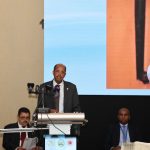
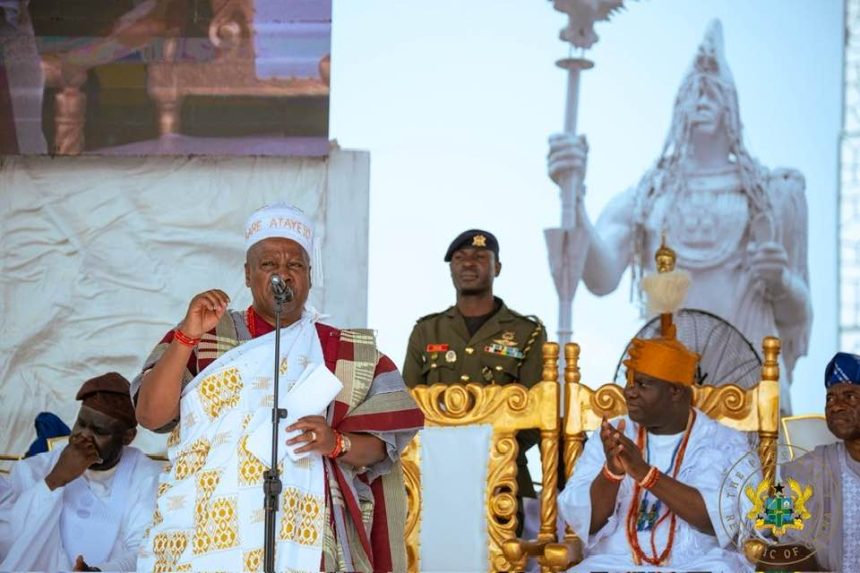
Speaking in Nigeria on Monday, the Ghanaian leader sid the subcontinent will always need the three brothers as their destiny is intertwined”.
“Our sub-region is facing challenges; we all know what is happening in the Sahel, he said on Monday
Three of our members have decided to break away and form the AES . “I believe that this shouldn’t deter us, because God put us in this sub-region together for a purpose.”
“I believe that instead of ostracising them, we must work to continue building the bridge between ECOWAS and our brothers in the Sahel, because our destinies are intertwined.”
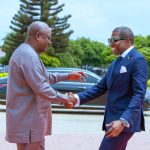
Mr Mahama, who took office in January, has made reconciliation with the breakaway states a cornerstone of his foreign policy. His diplomatic engagement began at his inauguration on 7 January, where Burkina Faso’s Captain Ibrahim Traoré attended in person, whilst Mali and Niger sent their prime ministers as representatives.
He later embarked on a diplomatic tour of all three countries in March, holding talks with military leaders in all three capitals about security cooperation and economic ties. In Burkina Faso, he proposed a gas pipeline from Accra, direct flights and electricity exports.
The president used a Ghanaian proverb to emphasise regional interconnectedness: “If there is fire burning in your neighbour’s house, take water and go help him to quench the fire, because when it finishes burning his house, it will spread to your house.”
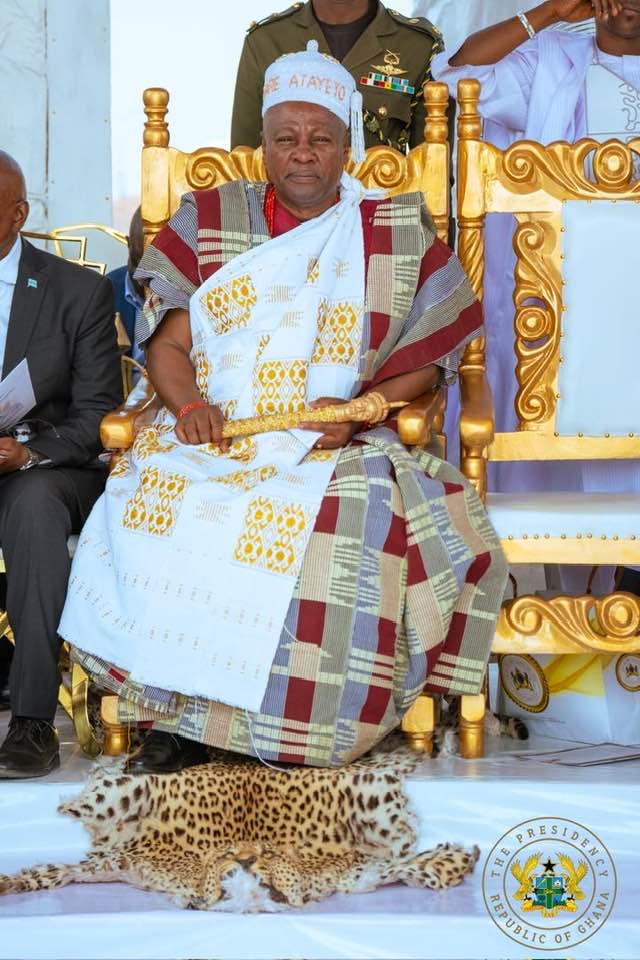
He was in Nigeria for a chieftaincy installation ceremony at Ile-Ife, where the Ooni of Ife conferred upon him the prestigious Yoruba title “Aare Atayeto Oodua of the Source”, meaning “a president who reorganises the global space for humanity”.
Mahama has since briefed Nigerian President Bola Tinubu, who chairs ECOWAS, on the concerns raised by the Sahel states during his visits.
His engagement stands in contrast to ECOWAS’s earlier approach, which included harsh sanctions and threats of military intervention following Niger’s July 2023 coup.
The three countries have complained that the regional bloc was more willing to threaten force over political transitions than to assist them in fighting jihadist groups that have killed thousands of civilians.
During his March tour, Mr Mahama held talks with military leaders in all three capitals, discussing security cooperation and economic ties. During his meeting with the Burkinabé junta, he called terrorism “a cancer that must be addressed through united action”.
In Burkina Faso, he proposed a gas pipeline from Accra, direct flights and electricity exports.
The president acknowledged the difficulty of the task after meeting Mr Tinubu. “It’s a complicated situation and it’s not as easy as we think,” he told reporters.
He has described the Alliance of Sahel States as “an irreversible reality” and argues that isolation would be counterproductive, particularly given shared security threats from terrorism that transcend borders.
Under his leadership, Ghana has appointed a special envoy with counter-terrorism expertise to maintain regular contact with the AES countries.
At ECOWAS’s 50th anniversary celebrations in April, Mr Mahama invited AES leaders as guests. The three countries sent representatives rather than their heads of state attending personally.
The withdrawal of Mali, Burkina Faso and Niger represents the deepest crisis in ECOWAS’s five-decade history, threatening regional trade and security cooperation at a time when the Sahel faces an intensifying jihadist insurgency.
The three landlocked nations depend on coastal neighbours like Ghana for maritime access and trade routes, making continued cooperation essential for their economic survival.
Mr Mahama’s bridge-building efforts reflect Ghana’s historical role as a champion of Pan-Africanism and regional integration, dating back to Kwame Nkrumah’s leadership in the independence era.