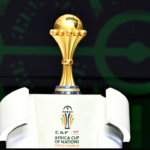




The 35th Africa Cup of Nations gets under way in Morocco today, marking a historic shift in the tournament’s calendar as the competition takes place during the festive period for the first time in its 68-year history.
Morocco take on Comoros in the opening match at the Prince Moulay Abdellah Stadium in Rabat, with the Atlas Lions beginning their campaign to capture a first continental title since 1976 in front of their home supporters.
The tournament, running until 18 January, features 24 nations competing across six groups in six Moroccan cities. The unusual December-January scheduling has been necessitated by FIFA’s expanded Club World Cup, scheduled for June and July 2025.
Morocco step into the spotlight as hosts for only the second time, having previously staged the competition in 1988. That edition came about in dramatic circumstances when Morocco stepped in as a last-minute replacement after Zambia withdrew for financial reasons and Algeria pulled out following a dispute with CAF. Morocco’s readiness with the Stade Mohammed V in Casablanca and Prince Moulay Abdellah Stadium in Rabat made them the ideal solution to rescue the tournament.
The North African nation was originally set to host the 2015 edition but withdrew due to concerns over the Ebola epidemic in West Africa. CAF reacted harshly at the time, excluding Morocco from the 2017 and 2019 tournaments and imposing nearly nine million dollars in penalties. However, the Court of Arbitration for Sport ruled entirely in Morocco’s favour, overturning the sporting sanctions and reducing the fine to 50,000 dollars.
The hosts enter the tournament as favourites following an impressive 18-match unbeaten run since June 2024, during which they have scored 55 goals whilst conceding just four. Their recent World Cup semi-final appearance in Qatar three years ago has established them as a force in African football.
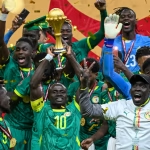
Defending champions Ivory Coast return with hopes of retaining their crown after their dramatic victory over Nigeria in last February’s final. The Elephants secured their triumph in a tournament that was held in early 2024 despite being designated as the 2023 edition.
Egypt, record seven-time winners of the competition, will be spearheaded by Liverpool’s Mohamed Salah as the Pharaohs seek to end a 15-year wait for continental glory. Their most recent triumph came in 2010, though they have reached the final twice since then.
The tournament has been expanded to 24 teams since 2019, with the top two sides from each group progressing to the knockout stages alongside the four best third-placed teams. The format has allowed greater representation from across the continent.
Among the competing nations are Senegal, the 2021 champions, Nigeria, perennial contenders led by Victor Osimhen and Ademola Lookman, and Cameroon, whose squad includes Manchester United’s Bryan Mbeumo.
The six groups see familiar powerhouses mixed with nations seeking to make their mark. Group A contains hosts Morocco alongside Mali, Zambia and Comoros, whilst Group B features Egypt, South Africa, Angola and Zimbabwe.
Group C brings together Nigeria, Tunisia, Uganda and Tanzania, with Group D containing Senegal, DR Congo, Benin and Botswana. Group E features Algeria, Burkina Faso, Equatorial Guinea and Sudan, whilst defending champions Ivory Coast face Cameroon, Gabon and Mozambique in Group F.
The tournament will be played across nine venues, with the final scheduled for the Prince Moulay Abdellah Stadium in Rabat on 18 January. The competition has attracted particular attention from European clubs, with numerous Premier League players departing for international duty during a congested festive fixture schedule.
Guinea was originally designated as hosts but had its rights withdrawn in September 2022 due to inadequate preparation of facilities and infrastructure. Following a fresh bidding process, Morocco was confirmed as hosts in September 2023.
The tournament mascot, Assad the Barbary lion, was unveiled earlier this month, whilst Puma has supplied the official match ball, named Itri, for the competition.
Several nations arrive with strong credentials. DR Congo impressed by reaching the semi-finals at the last edition, whilst South Africa qualified for next year’s World Cup and will use the tournament as preparation. Mali, who reached the quarter-finals in 2023, possess a physically strong side built around midfield quality.
For smaller nations, the tournament represents an opportunity to announce themselves on the continental stage. Comoros topped their qualifying group ahead of Tunisia, whilst Botswana and Tanzania will hope to spring surprises in challenging groups.
The scheduling has presented challenges for European clubs, particularly in the Premier League, where fixtures continue throughout the festive period. The situation has been further complicated by additional match days scheduled for late January in the expanded Champions League format.
Morocco’s preparations have been overshadowed by protests in September from young demonstrators concerned about government spending on sports infrastructure, including facilities for this tournament and the 2030 World Cup, which Morocco is co-hosting with Spain and Portugal.
As Africa’s premier football competition unfolds over the coming month, the continent will watch to see whether Morocco can harness home advantage to end their 49-year wait for glory, or if another nation will write their name into the tournament’s storied history.