

It was finally seeing the vine, after years of hard frosts and failures, now laden with an abundance of passionfruit. It was the way the golden flesh inside slumped against the rind when she sliced one open on a chopping board. And it was the bounty that just kept coming from the same vine that year – so many fruit that she found herself giving shopping bags full of them away to her neighbours.
The delighted grower of this dream crop was Sally-ann Moffat, a fashion stylist in New Zealand. It was more passionfruit than she could possibly eat. In contrast, at the supermarket, she would have paid around 11 New Zealand dollars (£5.66; $6.88) for a meagre packet of three commercially grown fruit, wrapped in plastic.
“I feel like the wealthiest woman on the planet,” she tweeted at the time, in 2019. It was the richness of a special crop, not an everyday crop. A richness that comes only with skill, perseverance – and a happy plant.
While many people grow passionfruit in New Zealand, Moffat says she had often struggled to get good results from her own vines because of the microclimate in the valley where she and her husband live, Wainuiomata, north-east of Wellington.
“We have terrible frosts,” she explains. Conversely, though, the area can get very hot during the summer, which gives the passionfruit a chance – so long as it has survived the winter. It’s possible to grow the fruit in some northern latitudes, too.
All over the world, rebellious gardeners have discovered that they can grow edibles generally considered unusual for their climate, upturning commonly held perceptions about what one can and cannot grow oneself. In Western Europe and North America, cultivating your own food does not only have to be about carrots, kale and courgettes – even in countries with mild climates, such as the UK, some tropical fruits grow unexpectedly well, with the right assistance. And in the hot and humid climate of Andhra Pradesh state, India, one group of gardeners has grown grapes – a fruit typically associated with the drier climate of the Mediterranean.
From saffron to Cape gooseberries, this is self-sufficiency with style – not just hearty staples but splendour, too. And practically anyone can grow at least some of these things, even if you don’t have any outdoor space. While climate change has made the weather more unpredictable and heatwaves more unbearable, in many countries it has also changed the variety of crops that people can produce domestically.
It’s not just about having fun. Amid the current rise in food prices and the associated cost of living crisis, many people are maximising the produce they cultivate themselves as a means of saving money. Instead of splashing out on fancy ingredients at the supermarket, it’s possible to grow a surprising number of supposedly extravagant edibles yourself for next to nothing.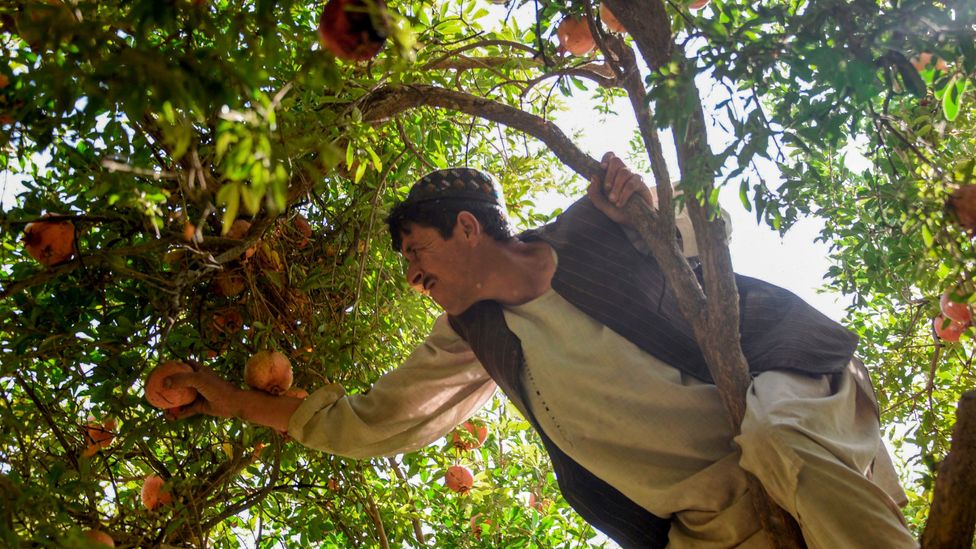
Though pomegranites tend to be grown in warm countries such as Afghanistan, Iran and India, they can cope with temperatures down to -15C (5F) (Credit: Getty Images)
This is how to do it – and why the rewards can be magnificent if you do.
Moffat was thrilled after one of her vines produced that glut of passionfruit. But it wasn’t easy, she says. It was only after finding an appropriately warm spot in the garden, and when one of the vines managed to spread its roots to a nearby nutrient-rich vegetable bed, that she got such great results. In the years since, her vines have yielded more fruit – but never again in such excess.
It may be challenging, but the passionfruit plant is a pleasure to grow and its flowers alone delight. “It’s one of the most unreal flowers that you can see, they’re just sculptural and magnificent,” says Moffat.
She grows many other edibles in her garden and has managed to cultivate sweet basil outdoors. Lately, she’s been thrilled to harvest her first peaches, and goes so far as to describe this as “a spiritual experience”. “It’s not like shopping for fruit. They haven’t been in a truck,” she explains. “It’s just sun-ripened and then on your taste buds.”
The pursuit of such opulence need not require extensive financial investment, says Sally Nex, gardener and author of How to Garden the Low-Carbon Way, who lives in Somerset in England. She has compared the cost of growing her own food to supermarket prices: “I can tell you, I saved hundreds of pounds in a summer – and that was at a time when food was cheap.”
Nex recommends that people consider the things they like to eat, then identify crops and ingredients that cost the most in the shops and use that as a guide to choose what to grow at home. The possibilities are manifold. One money-saving tip is to avoid wasting cash on expensive accessories such as pots from garden centres, and instead recycle old containers. If you can – though of course, not everyone has a big garden at their disposal – it’s helpful to make lots of your own compost, too.
Nex also points out that it’s important to know some crops are so cheap to buy in the shops, there’s little reason to grow them at home for purely economic reasons. This varies widely depending on where in the world you live, but in northern temperate climates it’s rarely worth growing white potatoes or onions to save money.
To maximise the economic benefits of growing your own food, it’s often more efficient to turn instead to less quotidian things. One example is Cape gooseberries, which are often found in the tropical fruit section of supermarkets or used as fancy garnishes on restaurant puddings in the Western world, but which can grow plentifully even in cooler climates like the UK. “I get bowls of them,” says Nex. “You can eat things like this by the fistful instead of having one measly one on your dessert.”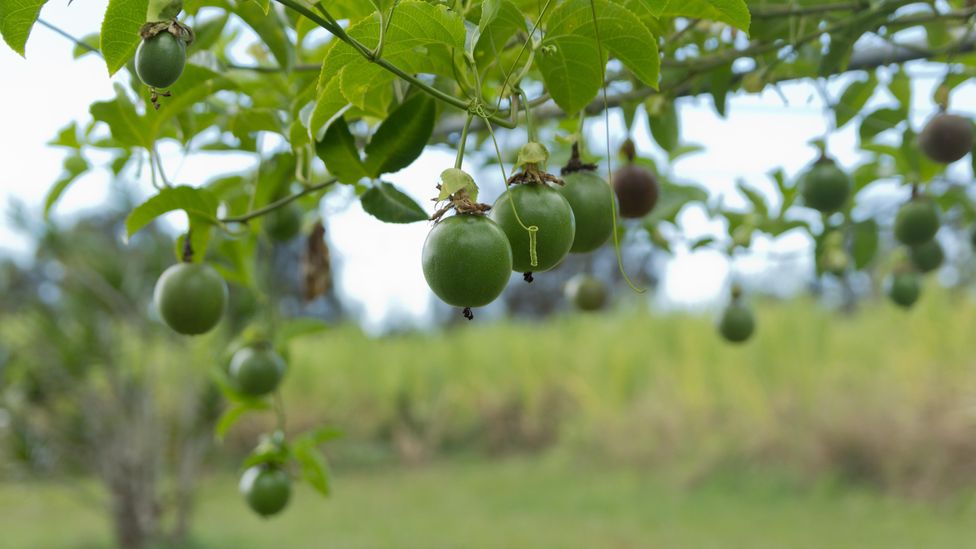
Though passionfruit is often thought of as definitively tropical, it will also grow in cool, wet climates such as the UK (Credit: Alamy)
Then there are the plants grown mostly for their flavour or aroma. You can take a stalk of lemongrass, cut open the base at one side and place it in a glass of water. Eventually, says Nex, a thick root will form, allowing you to plant the lemongrass in soil. You might have to be a little patient, she adds. She once watched and waited for two months before the sought-after root emerged. This is a process called propagation and it works for many different kinds of plants.
Nex explains that watercress is another example of where you can get these “free plants”. In Europe, it’s usually sold in pricey bags at the supermarket. But some of the clumps of leaves often still have a few thread-like roots at the bottom, making them perfect candidates for propagation so that you can harvest your own next time. You can even take the stem of something like Thai basil out of your dinner at a restaurant, or save one from a packet of shop-bought herbs, snip it below a leaf node – the bumps on a stem where leaves originate – and let that form roots in water, too.
21st Century Gardening
From working with contaminated city soil to reconsidering weeds, pests and even lawns, gardening is changing as we adapt it to the realities of modern life. This series takes a look at the future of gardens in the 21st Century – and explores how it can be updated to fit with modern sensibilities and challenges, such as environmental awareness and pollution.
It’s not necessarily a good idea to grow fruit and vegetables from seeds found in supermarket produce because the quality of the resulting plant will often be low. However, Nex says that you can plant ginger – if it sprouts, you’ll have your own ginger plant. Just be aware that this will not work if the root you buy has been sprayed with an anti-sprouting agent.
Saffron is among the most expensive ingredients, by weight, that people might buy when out grocery shopping. But you can actually grow this yourself, too. The little yellow-red strands of saffron that you sprinkle into a tagine are actually the dried stigmas of crocus flowers. You can buy the bulbs of these flowers, plant them just like you would tulips or daffodils, and wait. All you need to do, in theory, is use a pair of tweezers to harvest the stigmas – a grand total of three from each flower – and let them dry out.
Nex says this is actually harder than it sounds. “I’ve tried it a couple of times and, to be honest, I’ve sort of given up, really,” she says. “It flowers beautifully the first year, maybe the second year if you’re lucky.” After that, potentially no show.
Cape gooseberries are grown for their lantern-like flowers, which can be dried as decorations, as well as their orange, marble-shaped fruit (Credit: Getty Images)
But readers in places warmer than Somerset could have better results as long as they are prepared for the fact that the yield, a mere pinch of those tiny threads, is obviously very small.
It’s possible to grow nuts, too. Hazelnuts and walnuts sometimes grow reasonably well in the UK and other places with a relatively mild climate. The problem is getting the right weather throughout the year for the nuts to form well. And Nex has witnessed – with dismay – the carnage wrought on her own hazelnut trees by local squirrels, who leave her with practically nothing. (Though as you will read later in this series on 21st Century Gardening, perhaps we should embrace losing some of our garden plants to wildlife – even insects.)
While many spices require tropical climates, there are a few that thrive in more temperate parts of the world. Nex says you can grow coriander quite easily for its stalks and leaves but if you let the seeds form then you can also get a bonus crop of coriander seed, which can be ground up and, for example, added to curries. Then there’s chilli flakes, which require no garden whatsoever – at the end of the season just dry your chillies, which grow very well in greenhouses or on a windowsill in the Northern Hemisphere, and crush them up.
What about a Sichuan pepper shrub? You can harvest the berries, dry them out and then you’ll have a key ingredient used in many northern Chinese dishes.
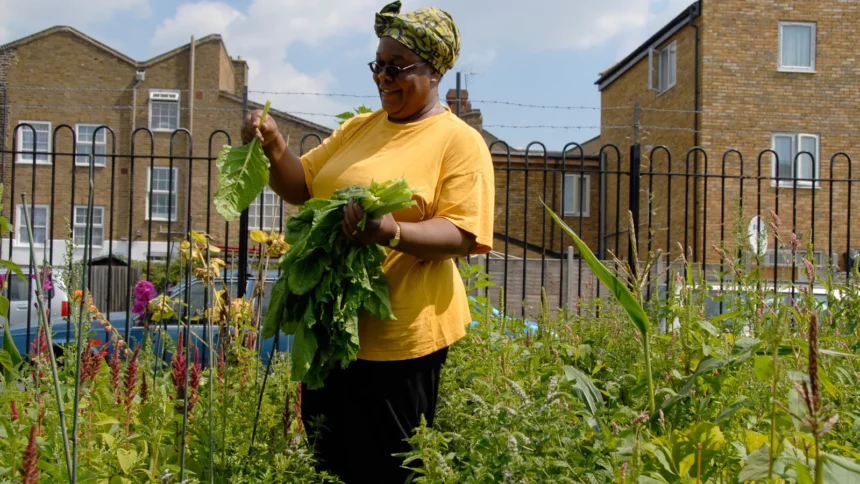
A lot of these foodstuffs might be considered unusual, depending on your ethnic background, your culture or what part of the world you live in. But for millions of people they are everyday edibles. It’s worth looking to the diversity of gardeners, as a demographic, to understand the true range of produce that might grow in a particular country.
That’s exactly what Anton Rosenfeld at the organic growing charity Garden Organic and colleagues did in a study published in 2017. The team of researchers plodded round 31 allotment sites in the Midlands region of the UK and surveyed a total of 107 ethnically diverse plot owners. They found that 26% of the food plants they were growing were “exotic” – crops that were not traditionally cultivated in that geographical area in large quantities.
People from Jamaican, Indian, Bangladeshi, Chinese and Vietnamese cultures, to name a few, have perfected growing an astonishingly wide variety of foodstuffs all over the world. Rosenfeld has encountered lots of examples. He was once amazed when he stepped into the back garden of a man in England who had built a frame to grow gourds – it was covered in them.
Grapes can cope with a wide range of climatic conditions, except long and harsh winters. They’re grown commercially in 90 countries worldwide (Credit: Alamy)
“It was a social thing – he would grow them and share them with friends and neighbours,” Rosenfeld explains.
Rosenfeld adds that there are networks of people who pass cuttings and seeds to one another once they have had success with a particular crop. These plants may have become slightly adapted to the British climate despite, in some cases, having originated on the other side of the world.
There are many ingredients, he says, that will grow well outside of their native latitudes. He suggests turmeric, fenugreek seeds and mustard seeds as some classic examples that do well in northern areas. Participants in the study had also succeeded – sometimes with the help of a greenhouse – in growing pineapples, papayas, yams, quinoa, chickpeas, Chinese broccoli and many other tasty crops.
It’s also worth noting that many of the familiar garden crops that we grow routinely and almost think of as native, are anything but – the potato may be an everyday staple in northern climates today, but in the 16th Century it was a fascinating curiosity from South America.
John Bussell, a teaching assistant in Hawaii who does some web programming in his spare time, used Covid-19 lockdowns to design an online tool called Harrvest that tells you what sort of edible crops you might grow – no matter where you are in the world – based on the US Department of Agriculture’s plant hardiness zone map, which sets out “climate zones” based on the average minimum winter temperature.
But Bussell advises not to view this as too prescriptive, because you may live in a microclimate. For example, some gardens are warmer than the surrounding area because of a brick wall or patio that soaks up heat. “You can almost think of those [climate] zones as more a challenge or a suggestion,” he says.
Bussell has experimented with different edibles himself and was pleased to harvest more than two dozen tomatillos, small green fruits also known as Mexican husk tomatoes, in 2020, which he then used to make salsa verde.
“They grew incredibly well, they grew better than my tomatoes did that year, actually,” he recalls. “It was a case of doing the research and taking a chance.”
However, climate change is also partly responsible for the diversity of garden plants grown today, says Chris Atkinson, a plant scientist and professor emeritus at the University of Greenwich. While he describes the pace of climate change as “alarming”, he notes that it has allowed some commercial producers in the UK to branch out and cultivate crops that previously would not grow very reliably here. Take the farmer in the Midlands who celebrated the first commercial melon crop in the UK just 12 years ago, for example.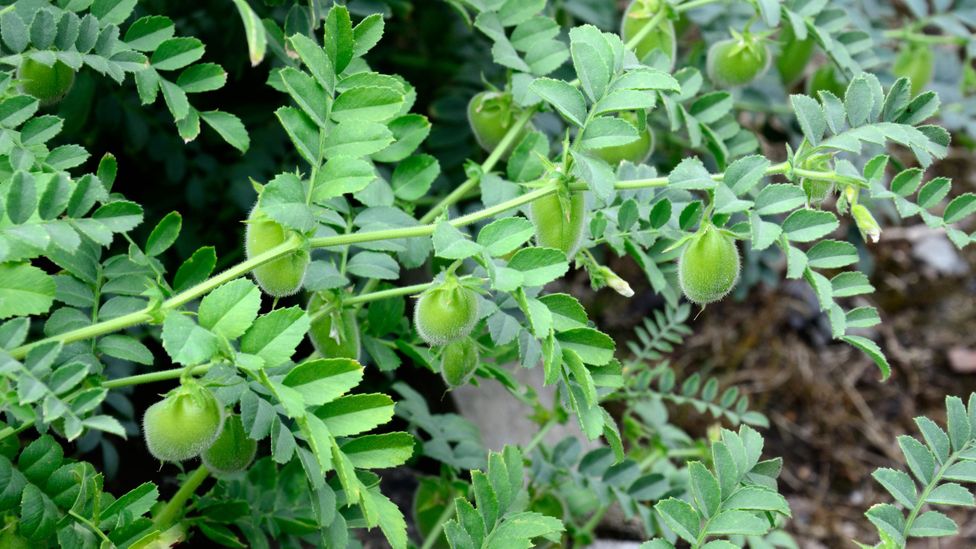
Chickpeas are native to the Mediterranean, but they will also grow in cooler temperate or tropical climates (Credit: Alamy)
Rising temperatures mean it is easier to grow fruit such as sweet cherries, too, says Atkinson: “Back in the 1930s, the only place you could grow them with regard to a suitable climate was Kent. But now the distribution and potential has expanded much further north.”
Unfortunately this is a slim silver lining – climate change is expected to lead to many new challenges for gardeners, including more frequent droughts and flooding, as well as creating the conditions for pests and diseases to spread more easily.
Despite these changes, people can benefit in all sorts of ways from growing a broad variety of food themselves, says Atkinson, arguing that it can be physically and mentally sustaining.
For Moffat, experiments with diverse home-grown edibles are always a “trade-off” between the effort involved and the excitement of growing a new or unexpected crops. You take the time to care for a plant, find out what it needs, provide that – and then it rewards you. Why not go for the most gobsmacking results, then, and the ingredients that will most enrich your dishes?
The joy of reaping the sweetest, zestiest, spiciest and most unusual rewards from your own garden is particularly satisfying, hints Moffat. “What would you pay to be able to walk outside and pick your own peach, and have it for breakfast?” she says. “It is a priceless feeling. It’s a priceless experience.”