



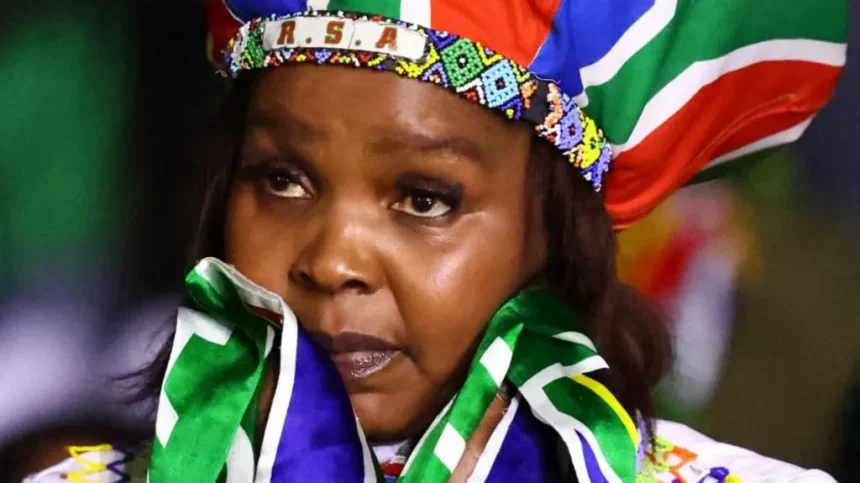
For most of Africa, Thursday night was not about football. It was about payback.
When Bafana Bafana trudged off the pitch at the Estadio Azteca in Mexico City, beaten 2-0 by co-hosts Mexico in the opening match of the 2026 FIFA World Cup, the reaction across much of the continent was not sympathy — it was mockery. And the jokes carried a pointed message.
Within minutes of the final whistle, social media platforms lit up with memes of Mexicans in sombreros, mariachi bands and taco imagery. African users across Nigeria, Ghana, Kenya, Zimbabwe and Mozambique flooded X, Facebook and TikTok — not to console South Africa’s players, but to celebrate their defeat.
Many changed their profile pictures to the Mexican flag. Others adopted Spanish-sounding names for the day. The hashtag circulating most widely said everything: “Mexico versus xenophobia.”
The message behind the banter was unmistakable. South Africa has faced mounting criticism from across the continent over recurring attacks on African migrants living within its borders. In 2026, tensions flared again after activist groups issued public demands for undocumented foreigners to leave the country by the end of June — warnings that rights groups say risk inciting violence against vulnerable communities. For many Africans watching the match, cheering against Bafana Bafana was a statement.
Daniel Kaniki, a Congolese supporter watching at a fan park in Atlanta, put it plainly. Africa, he said, was supposed to be one family — and South Africa’s treatment of migrants had broken that bond. He had no hesitation supporting Mexico.
A prominent Kenyan lawyer went further on X, sardonically wondering aloud whether South Africa would find a way to blame African migrants for the two red cards and the 2-0 scoreline. Others were more playful but no less cutting. One post suggested Bafana Bafana’s coach had been shouting “go back, go back” on the touchline — not as a tactical instruction, but out of habit from pursuing immigrants. Another said the players arrived exhausted, having spent their energy chasing foreigners out of the country rather than preparing for the tournament.
The trolling was not universal. In South Sudan, fans gathered at public viewing centres in the capital, Juba, and cheered loudly for Bafana Bafana. The country has deep historical ties with South Africa, rooted in shared struggles against oppression, and those bonds were not easily set aside over social media sentiment. A Ghanaian supporter at the same Atlanta fan park said he was proudly backing South Africa, arguing that the xenophobic attacks were the work of a small minority and should not define an entire nation.
The response from South Africans online was equally fierce. One widely shared post declared that South Africa had qualified for the World Cup without any support from the rest of the continent and would remain proud regardless of the result. A South African woman whose video went viral argued that the mockery revealed something older and uglier — that other African nations had never truly supported South Africa and were merely using xenophobia as a convenient excuse to express long-held resentment. She pointed to South Africa’s record in rugby, cricket, athletics and swimming as evidence of a country that had consistently excelled on the world stage with little continental acknowledgement.
Others offered a more conciliatory tone, admitting that not all South Africans were xenophobic and expressing genuine hope that the team would recover — while making clear that the trolling had felt entirely deserved.
What played out on social media on Thursday was about far more than a football result. It exposed the fragility of African solidarity at a moment when the continent’s most prominent sporting nation stands accused of turning on its own neighbours.
South Africa remain one of ten African teams at an expanded 48-team World Cup. They face Czechia on 18 June in Atlanta and South Korea on 24 June in Guadalajara — needing points from both to have any hope of reaching the knockout stage for the first time in their history.